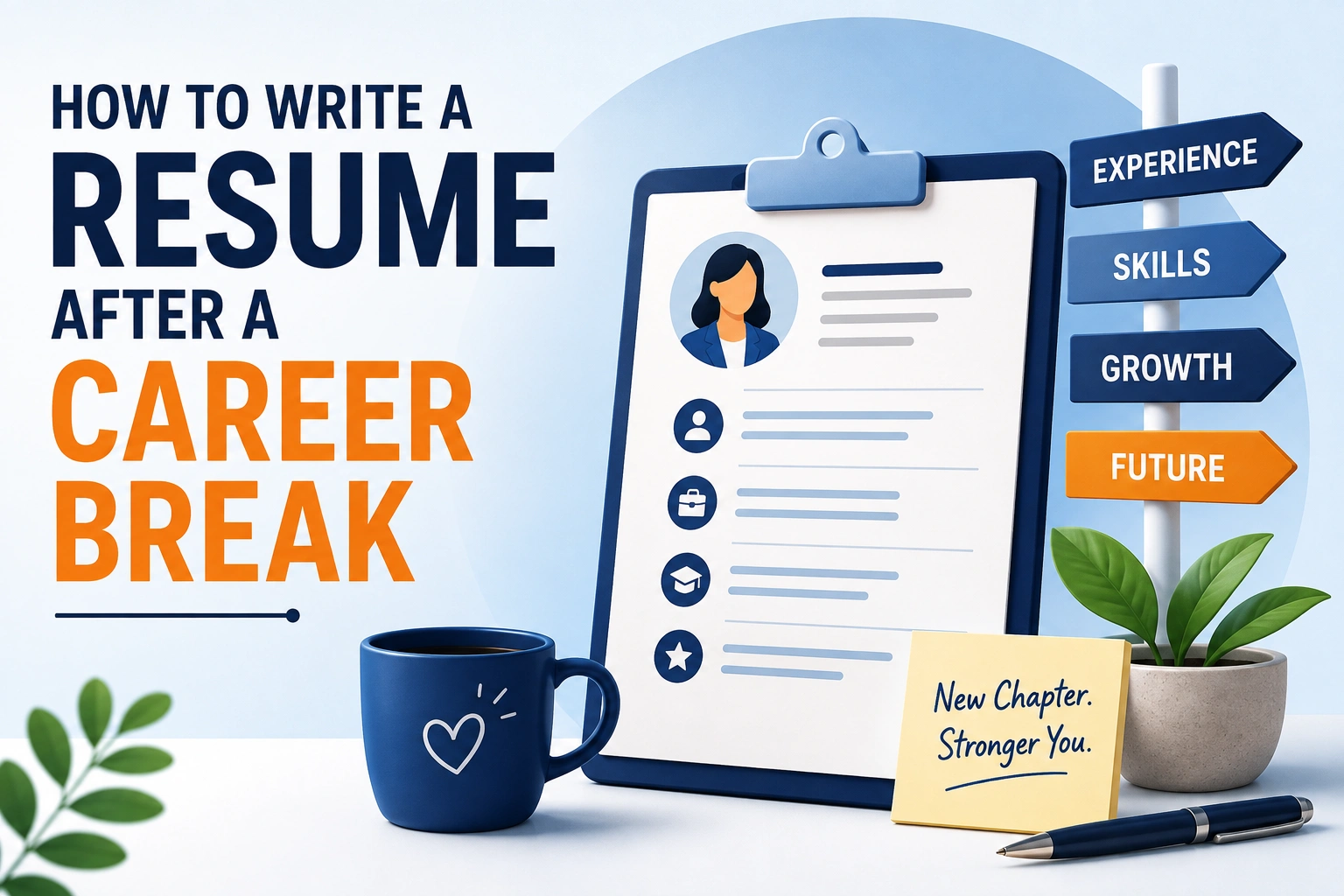
How to Write a Resume After a Career Break
Written from a recruiter’s desk — for returning professionals, career switchers, and anyone re-entering the workforce.
A candidate once apologized to me before the interview even started. “I have a two-year gap,” she said, bracing for judgment. “I understand if that’s a problem.”
It wasn’t a problem. She’d cared for a sick parent, then finished an online certification. What worried me wasn’t the gap — it was that she almost talked herself out of the room before we began.
Here’s what 15 years of hiring has taught me: recruiters don’t reject career breaks. They reject unexplained, badly presented ones. Handle the gap with confidence and clarity, and it barely registers. Let me show you how.


Key Takeaways
- A career break is common and acceptable — how you present it is what matters.
- Name the gap briefly and honestly. Silence looks worse than any reason.
- Show what you did or learned during the break — courses, freelancing, caregiving skills.
- Use a format that highlights skills, not just an unbroken timeline.
- Confidence is the real test. If you own it calmly, recruiters follow your lead.
Why Career Breaks Are Normal Now
Career breaks used to carry stigma. That’s fading fast. People take time off for caregiving, health, higher study, parenting, relocation, or burnout — and employers increasingly understand this.
In 2022, LinkedIn introduced a dedicated “Career Break” feature that allows members to highlight time away from work for reasons such as caregiving, health, travel, or personal development—helping reduce the stigma of unexplained employment gaps.
Source: LinkedIn News
When a platform used by employers worldwide builds a feature for breaks, it tells you the stigma is officially outdated.
📌 Recruiter Tip: I’ve never once rejected a strong candidate purely for having a gap. What makes me hesitate is a resume that tries to hide one — mismatched dates, vague timelines, months that don’t add up. Honesty reads as confidence. Concealment reads as a red flag.
Step 1: Choose the Right Resume Format
Your format decides how visible the gap is. Pick the one that frames you best.
| Format | Best For | How It Handles the Gap |
|---|---|---|
| Reverse-chronological | Short breaks (under a year) | Lists the break as one dated entry |
| Combination | Most returners | Leads with a skills summary, then dates |
| Functional (skills-first) | Long breaks, career switchers | Foregrounds skills over the timeline |
For most people returning after a break, the combination format is the sweet spot. It opens with a strong summary and skills section — so recruiters see your value first — then presents your history, gap included, further down.
⚠️ Warning: Don’t Fake the Dates. The most damaging mistake I see is stretching old job dates to cover a gap — writing “2020–2023” for a job that ended in 2021. Background checks and reference calls catch this, and it turns an innocent break into a trust problem. A real gap is forgivable. A lie about it is not.

Step 2: Name the Break — Briefly and Honestly
Put the break in your work history as its own short entry. One line does the job. You don’t owe anyone your life story.
Sample wording you can adapt:
- Career Break — Family Caregiving (2022–2023): Managed full-time care for a family member; completed a Google Data Analytics certification during this period.
- Career Break — Health & Recovery (2021–2022): Took planned time off; now fully available and re-energized.
- Career Break — Higher Study (2023): Completed a full-time PG diploma in Digital Marketing.
- Career Break — Parenting (2020–2022): Full-time caregiving; freelanced part-time on content projects.
Notice the pattern: a clear label, a short reason, and — where possible — something you did that keeps you current.
💡 Pro Tip: If you learned or did anything during the break — an online course, freelance gigs, volunteering, running a household budget, managing a family event — frame it in professional language. “Coordinated a 150-guest family event” is real project management. Don’t undersell unpaid work.
Step 3: Lead With a Strong Summary
Your resume summary is where you set the tone. Use it to point forward, not backward.
Before: “Experienced professional currently unemployed, looking to restart my career.”
After: “Marketing professional with 6 years’ experience, returning from a planned career break. Completed an advanced digital marketing certification during time off. Skilled in SEO and content strategy, now seeking a remote marketing role.”
The second version acknowledges the break in four confident words — “returning from a planned career break” — then moves straight to value. That’s the whole trick: name it, don’t dwell on it.
Step 4: Show You Stayed Current
The one real concern behind a gap is “are your skills rusty?” Answer it directly. Add a short section — call it Professional Development — listing anything that keeps you relevant:
- Online courses and certifications (Google, Coursera, HubSpot, LinkedIn Learning)
- Freelance or volunteer projects
- Industry reading, communities, or events you kept up with
- Tools you practised or refreshed
Even one recent certification signals “I’m ready and current.” It reframes the break as a period of growth, not absence.

Common Mistakes → Impact → Fix
| Mistake | Impact | Fix |
|---|---|---|
| Hiding or ignoring the gap | Looks evasive, invites suspicion | Name it in one honest line |
| Faking or stretching dates | Fails background checks, kills trust | Use real dates, always |
| Over-explaining the break | Sounds defensive | Keep it to one line, then move on |
| Apologising for the gap | Signals low confidence | State it neutrally and pivot to value |
| No proof of staying current | Raises “rusty skills” doubt | Add a Professional Development section |
| Leaving skills buried at the bottom | Recruiter sees the gap first | Use a combination format, skills up top |
What Recruiters Actually Look For
When I read a resume with a break, I’m checking three things — and none of them is “why did they dare take time off.”
- Is it explained? A one-line reason settles it. Mystery gaps make me pause.
- Are they current? A recent course or project tells me you’re ready to contribute.
- How do they carry it? Confidence in the wording (and later, in the interview) matters more than the break itself.
After thousands of resumes, the returners who get hired have one thing in common: they treat the break as a fact, not a confession. They state it, back it with something useful, and move on to what they offer.

Conclusion and Action Plan
A career break is not a weakness to hide. It’s a fact to present well. The candidate I mentioned at the start? She got the offer — not despite her gap, but because she eventually explained it calmly and let her skills do the talking.
Your action plan this week:
- Choose a combination format so your skills appear before the gap.
- Add the break as one honest, one-line entry with a clear reason.
- Write a forward-looking summary — name the break in a few words, then pivot to value.
- Add a Professional Development section proving you stayed current.
- Practise saying your gap out loud in one calm sentence, ready for interviews.
Ready to rebuild your resume with confidence? Create an ATS-friendly resume using Smart Resume Studio on WorkAnywhere.in — it helps you present a career break the right way — and improve your chances of getting shortlisted for your next opportunity. Then explore the verified remote companies directory for flexible roles that suit returning professionals.
Frequently Asked Questions
How do I explain a career break on my resume? List it as a short, dated entry with a clear reason — caregiving, health, study, or relocation — plus anything you did to stay current. One honest line is enough. Then lead your resume with a strong summary and skills so recruiters see your value first.
Should I mention the reason for my career break? Yes, briefly. A simple label like “Career Break — Family Caregiving” reassures recruiters and removes mystery. You don’t need to over-explain or share private details. One line is plenty; save any deeper context for the interview if asked.
Does a career break look bad to employers? Not on its own. Most recruiters accept breaks for caregiving, health, study, or parenting. What raises concern is a hidden or unexplained gap, faked dates, or a lack of recent skills. Presented honestly and confidently, a break is rarely an issue.
What is the best resume format after a career break? A combination format usually works best. It leads with a skills summary so your strengths appear first, then shows your work history with the break included. Skills-first (functional) formats suit longer breaks or career switches.
How do I show I stayed current during my break? Add a Professional Development section listing courses, certifications, freelance work, or volunteering. Even one recent certification from Google, Coursera, or HubSpot signals you’re ready and up to date, reframing the break as a period of growth.
How long of a career break is acceptable? There’s no fixed limit. Breaks of a few months to a few years are common and accepted when explained. What matters is a clear reason and evidence you’re ready to return, not the exact length of time away.
Should I address the gap in my cover letter too? A single confident line in a cover letter can help — briefly note the break and your enthusiasm to return. Keep it short and positive. The cover letter is a good place to add warmth that a resume entry can’t.
How do I talk about my career break in an interview? Say it in one calm, rehearsed sentence: the reason, and that you’re now ready. For example, “I took planned time off for caregiving and used it to complete a certification — I’m fully focused on returning now.” Confidence closes the topic quickly.
More from Remote Guide